The essays
One question each, answered with real data and a model you can move.
-
≠01
The average user doesn't exist.
How is the value of AI shared among the people who use it?
-
≠02
What's left of the job.
What part of a job does AI take, and what happens to the rest?

Why All Else Unequal
Economics explains the world one variable at a time. Change the price, hold everything else equal, and watch what happens. Ceteris paribus is the most useful assumption in the discipline, and AI is breaking it.
AI does not move one variable. It changes what a task is worth, what people pay, how productive a team is and who keeps the gain, all at once. And it does so unequally: one American user in eight would not give it up for $500 a month; half would for less than $12.
All Else Unequal takes one question at a time. Each essay puts the real data on the page, lets you move the model yourself and keeps my opinion apart, labelled as such. The aim is not to predict the future. It is to understand the mechanism well enough to argue about it.
Key findings
The short version, with sources. Each one links to the plate where you can check it.
- ≠01
- Half of American AI users would give up every AI tool for a month for less than $11.48. The average, $124.50, describes almost nobody: 72 in 100 value AI less than that, and 12 in 100 would not give it up even for $500. Stanford Digital Economy Lab, March 2026 · Plate 2 · en español
- ≠01
- What separates the users who value AI most is practice, not money. Using it frequently goes with $36.90 a month more at the median; paying for a subscription, with $2.90; a college degree, with nothing measurable. Stanford Digital Economy Lab, 2026 · Plate 3 · en español
- ≠01
- The median value of a month of AI rose from $0.52 in December 2024 to $11.48 in March 2026: twenty-two times higher in fifteen months. Stanford Digital Economy Lab, three surveys · Plate 4 · en español
- ≠02
- AI takes tasks, not jobs. By the ILO's scores for 3,265 tasks, it could do 23 of a database administrator's 40 weekly hours, and 8 of a building electrician's. ILO Working Paper 140, 2025 · Plate 2 · en español
- ≠02
- Two years after ChatGPT, Danish workers in 11 highly exposed occupations show no effect on earnings or hours; effects larger than 2% are ruled out. Most of the time chatbots save goes into other tasks. Humlum and Vestergaard, 2026 · Still waters · en español
- ≠02
- Exposure doesn't decide the path. Since 2022, EU clerical jobs have shrunk 0.9% a year while ICT professionals, just as exposed, have grown 5.7% a year. Eurostat, 2022–2025 · Plate 4 · en español
≠02What's left of the job.
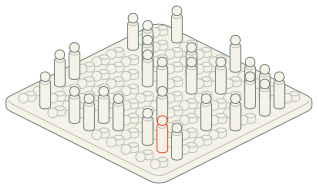
AI takes tasks, not jobs. Of a database administrator's 40 hours, the ILO's task scores say it could do 23. Of an electrician's, 8.
How much of what AI could do actually happens?
Point at a block to see its task.
A database administrator's week, by the ILO's task scores (2025), with the hours split equally among its tasks. From ≠02, Plate 2.
How it works
Each essay takes one question about AI and the economy, puts the real data on the page and lets you move the model yourself. Every passage says what kind of claim it is:
Data
What was measured, with its source. “In March 2026, economists at Stanford asked 1,908 American AI users what they would take to give up every AI tool for a month.”
Model
What theory makes of it. “When an average is ten times its median, it describes almost nobody.”
Opinion
What I think, and only that. “A year ago I would have asked for much less.”
Guess first.
Five questions from the essays. Lock a guess, then see the data.
Score of 500
For teaching and podcasts
Everything here is made to be reused. Take a plate into a class, a slide or an episode, with credit.
- Plates
- Every figure is numbered, with its own link, a citation ready to copy and a PNG for slides with the credit written in.
- Data
- The numbers behind every plate as CSV, with sources and dates.
- Licence
- Plates and data under CC BY 4.0: use them, adapt them, credit All Else Unequal.
Questions
What is All Else Unequal?
A publication of visual essays on the economics of AI. Each essay takes one question, such as what AI is worth to the people who use it or which parts of a job it takes, and answers it with real data and an interactive model you can move yourself.
Who writes it?
Víctor Simó Baeza, an economist who works with data and AI at a large company. Opinions are his own and are labelled as such.
Where does the data come from?
From published research and official statistics: the Stanford Digital Economy Lab, the International Labour Organization, Anthropic, Microsoft, Humlum and Vestergaard's study of Danish workers, and Eurostat. Every plate names its source and date, and its numbers can be downloaded as CSV.
Is it for or against AI?
Neither. Every passage says what kind of claim it is: data (what was measured), model (what theory makes of it) or opinion (what the author thinks). The aim is to understand the mechanism well enough to argue about it, not to predict the future.
Can I use the plates in a class, a slide or a podcast?
Yes. Plates and data are published under CC BY 4.0: use them and adapt them, with credit to All Else Unequal. Every plate has its own link, a citation ready to copy and a PNG for slides.
Written by Víctor Simó Baeza
An economist who works with data and AI, and who wanted a place to think through what one does to the other. New essays are announced on LinkedIn.